
There’s a popular belief that the more talent you have, the less you need a teacher. Many of us have heard, with a certain inner discomfort, a proud parent say: “My child is so talented: they play guitar, drums, bass, piano, percussion, harmonica, all by ear, without any teacher.” And the discomfort comes from the fact that what they see with so much excitement, we professional musicians see for what it is: a diamond in the rough, unpolished, flawed and full of mistakes.
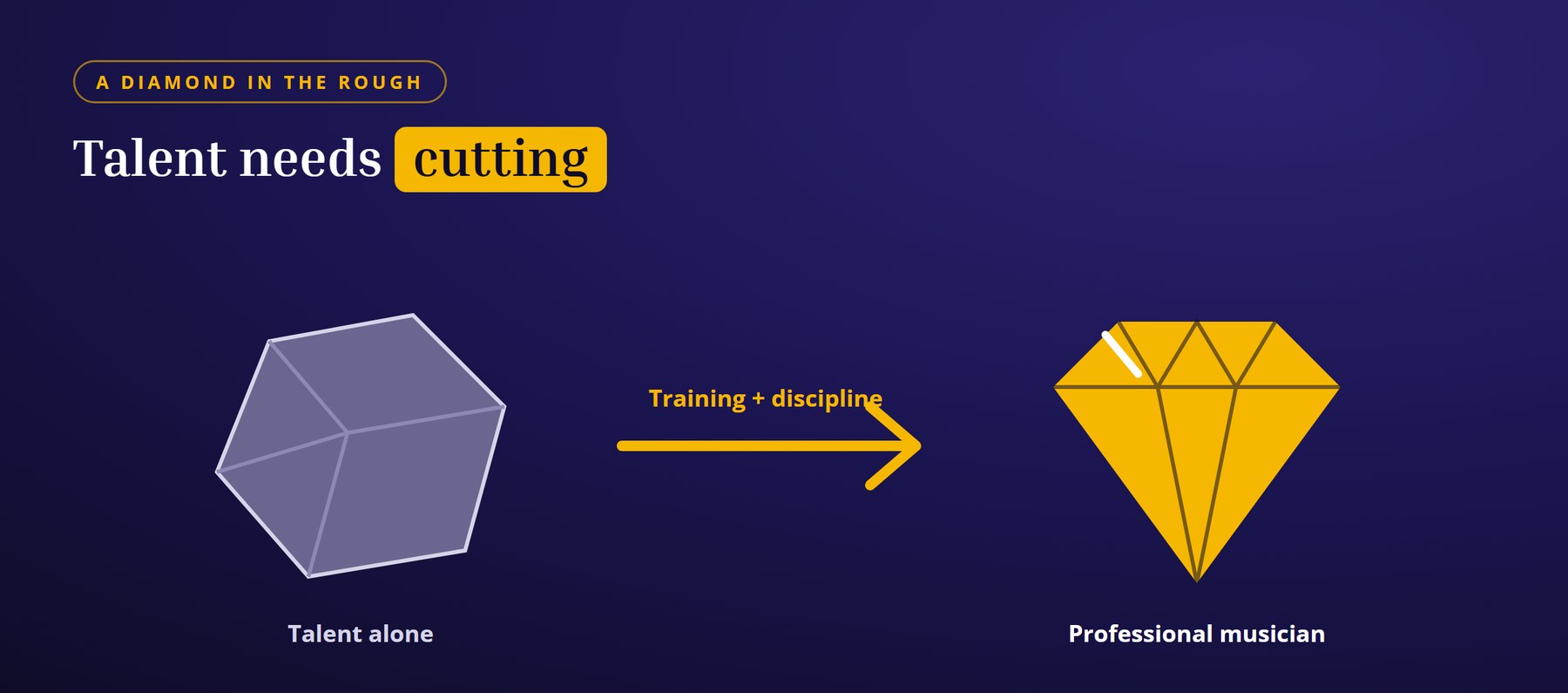
When you’ve lived through 10 years of studying an instrument yourself, and on graduating you know you still have a world of things to learn, it’s a little hard to believe that someone, just by existing, already plays 10 instruments self-taught. Making an instrument sound is very different from playing it correctly: anyone can press piano keys with their elbows or feet, but from that to playing Chopin there are quite a few years of difference.
First experiences
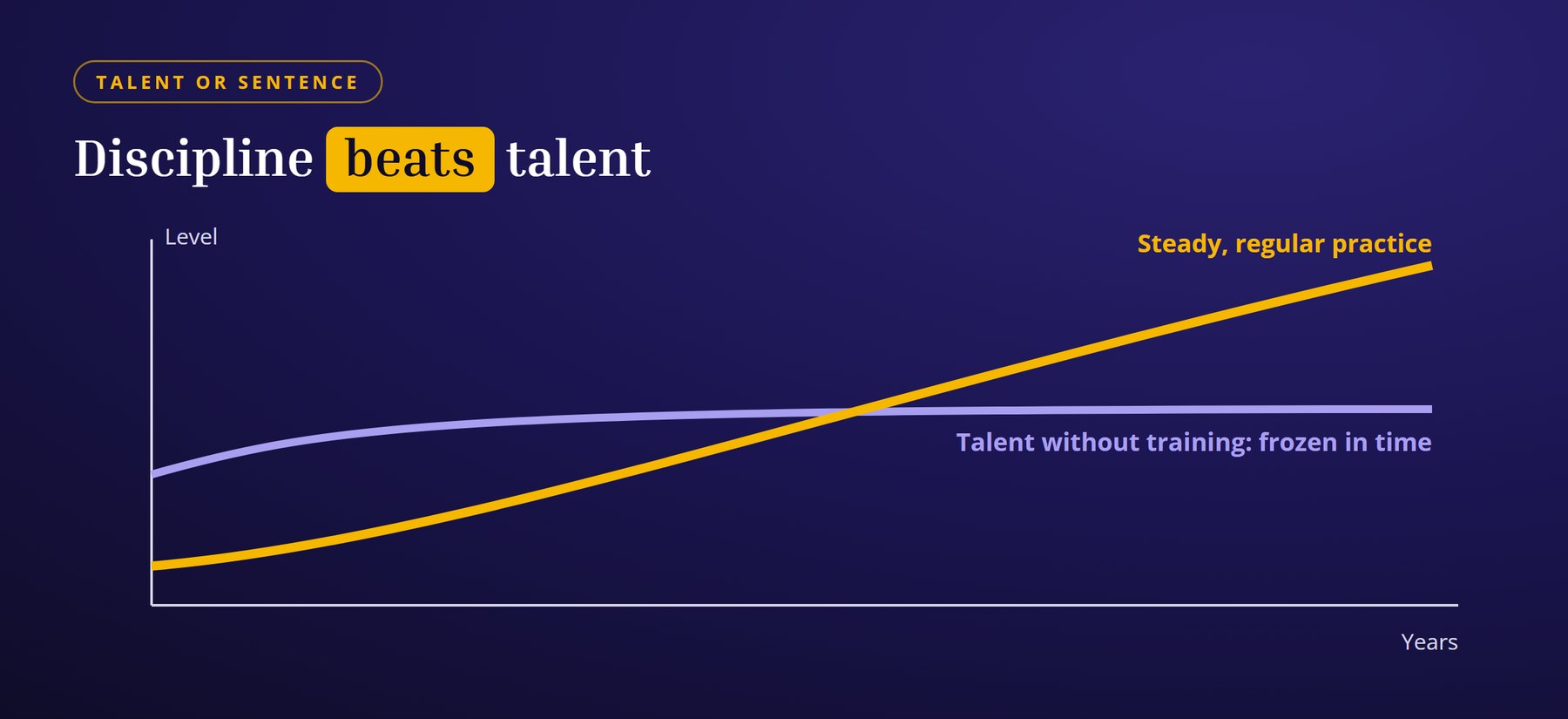
The first thing we discover when studying with a music teacher is that discipline beats talent: students who have been training for years are overtaken by others who, although they’ve been learning for less time, devote more hours to their instrument in a regular, consistent way. Talent helps you move faster and more easily, but it’s hard work that takes you far, and that’s why today we see so many children who, with daily discipline from a very young age, already show virtuosity.
Talent or sentence
Those of us who have been in this field for more than a decade remember, from a distance, some very special cases: people with immense ease and naturalness in music who never seriously cultivated their musical training, and who today are at exactly the same level as when we started. Now, as professionals, we remember how they used to impress us, and today we see them as beginners frozen in time.
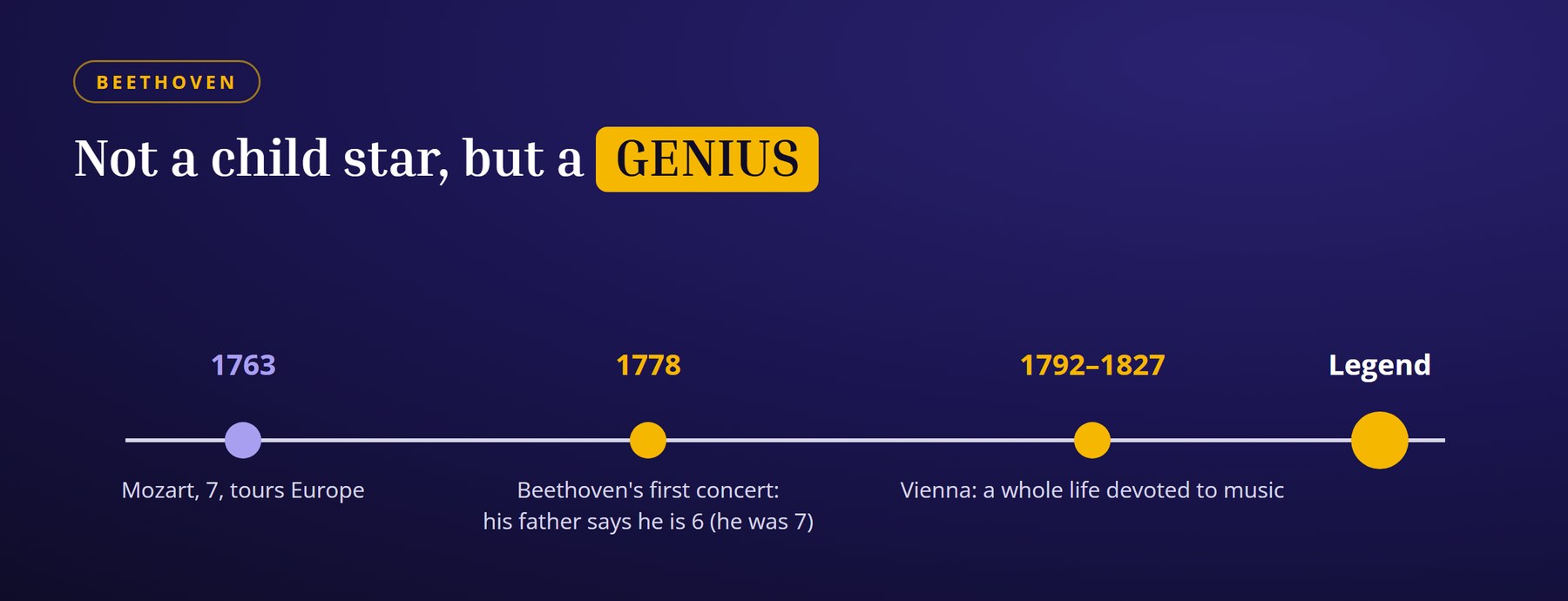
Did you know that Beethoven’s father wanted to turn him into a new Mozart? Aware of the success Mozart had had as a child performer, he promoted Ludwig as a child prodigy, and even claimed on the posters for his first public performance that he was six, when he was already seven (1). As a child, Beethoven never reached the fame Mozart had… But here’s the key: Beethoven didn’t stop. He devoted his whole life to music, eventually becoming the legend we know today, the GENIUS he did become. Although it took him longer, with a lot of discipline and work he made it, and the rest is history.
Why do you need someone’s guidance?
With a good teacher you have something that applies to every area of human knowledge: you don’t start from zero, you build on their knowledge and experience to move forward on the most solid foundation. Imagine for a moment studying physics on your own, or medicine, or construction. You’d be going back centuries, rediscovering things that are basic today but were once fascinating. Basically, by learning music on your own you waste time while centuries of musical progress are within your reach, progress that would make you a professional fully prepared for today’s world.
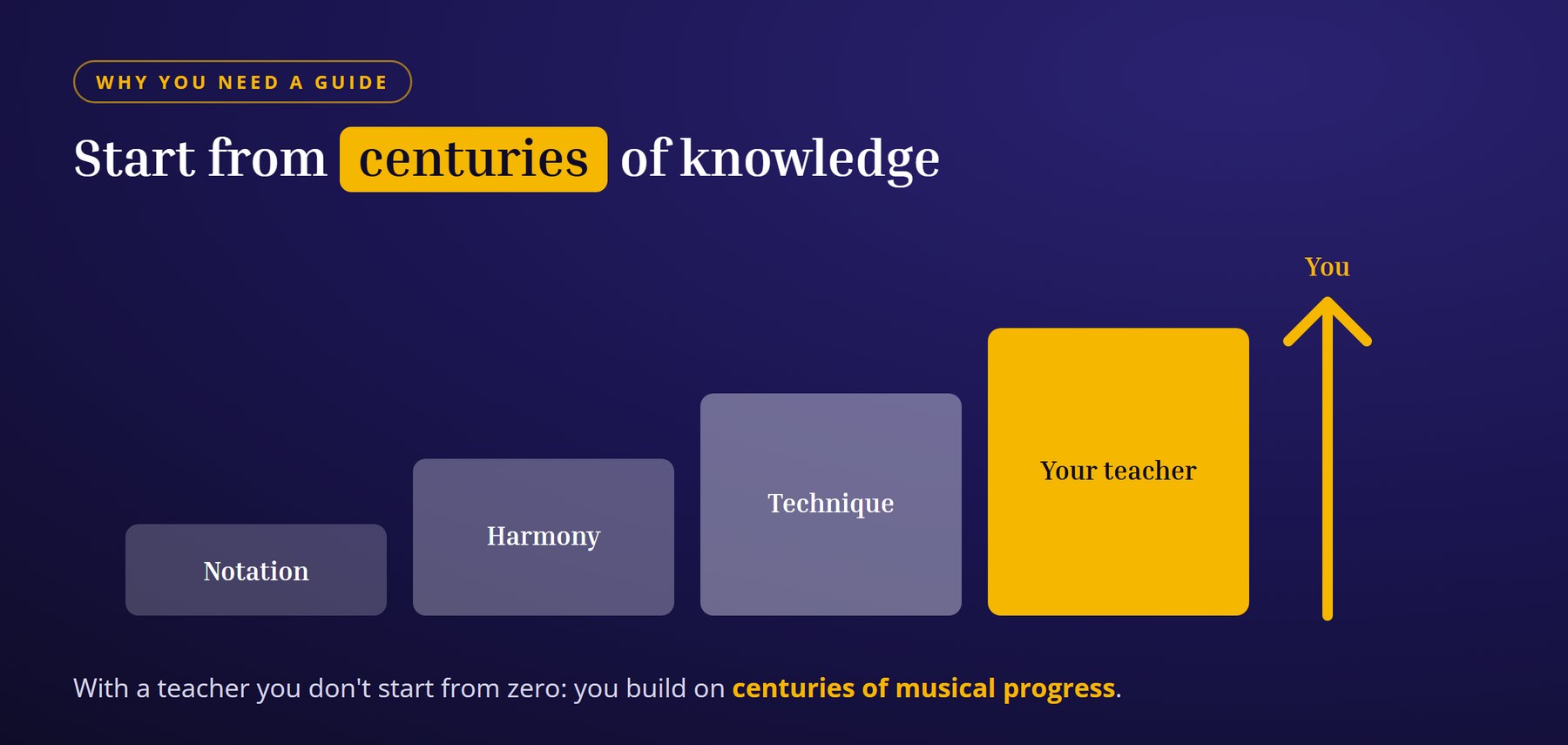
So yes, with talent you can make an instrument sound without anyone’s help, but if music is your passion and you want to go far and become a professional, you’ll need a teacher.

0 Comments