

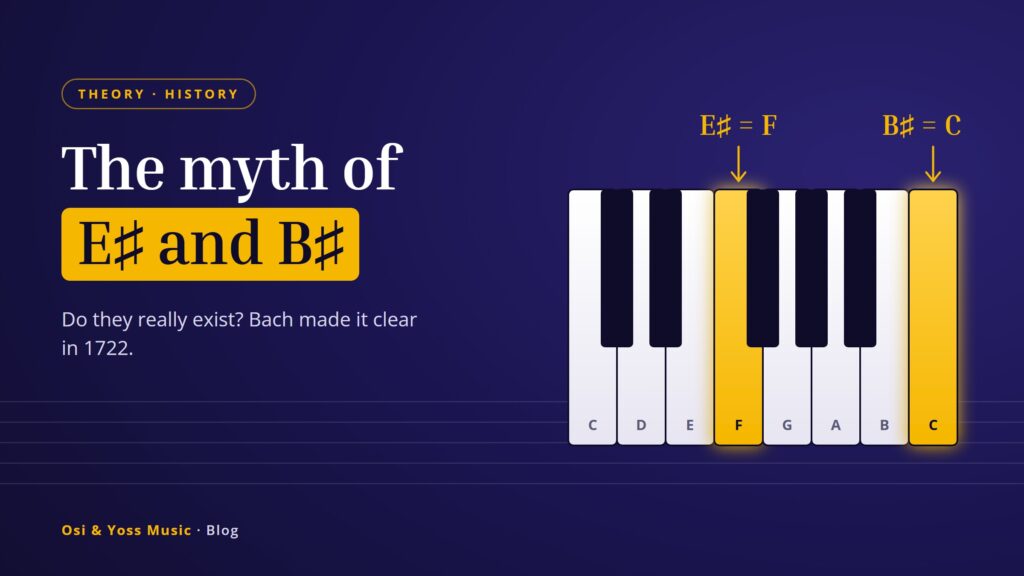
If you’re just starting out in music, or have never studied music theory in depth, you probably think that “E sharp” and “B sharp” don’t exist. If you want to expand your musical knowledge, stick around: we have valuable content for you. To debunk this myth, we need to go back and talk about where it comes from.
Enharmonics
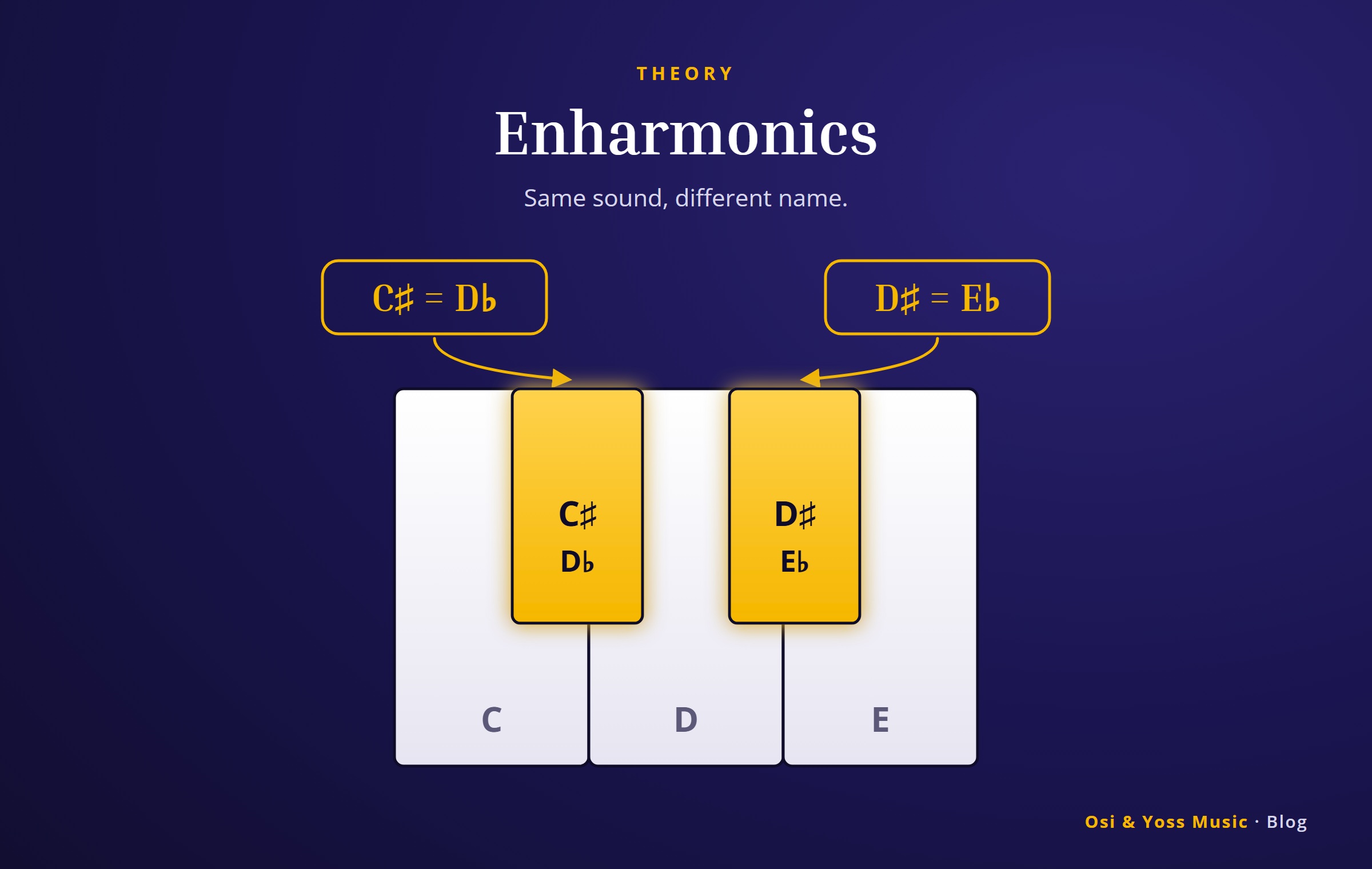
You probably already know the definition, but if not, here it is. Two notes are enharmonic when they have different names but sound the same (in the tempered system), such as “C sharp” and “D flat”.
Now, “E sharp” is enharmonic with “F”, just as “B sharp” is enharmonic with “C”. Of course, this puzzles those who are just starting out or haven’t gone deep into their musical studies, since the keys they use most are “C major” (and therefore “A minor”), where these notes are very unlikely (though not impossible). In fact, most of today’s “popular” or “commercial” music almost always uses the same keys, because they are easier to handle and to absorb for any composer or singer-songwriter throughout the creative process. The more complex keys are left mainly to highly trained composers and jazz musicians, who not only use every existing key but also very often change key in the middle of their works.
Historical precedent
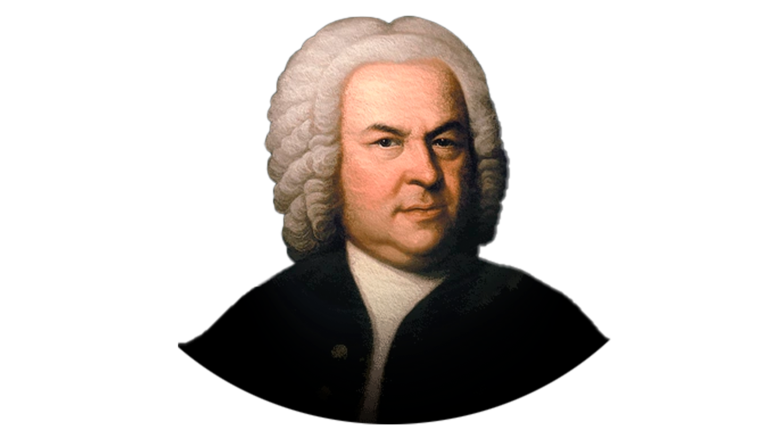
It was in the 18th century that the great master Johann Sebastian Bach completed and compiled “The Well-Tempered Clavier”, two volumes of 24 preludes and 24 fugues each (96 works in all). In it he shows that with the tempered system (the main tuning system of Western music, still in use today) you can play in every key, breaking the barrier that existed at the time regarding which keys could be used, and marking a turning point in the evolution of music. That is 48 preludes and 48 fugues in every key, and in each work he very naturally travels (modulates) through other keys to enrich his compositions.
This feat, achieved in 1722, disproved the supposed non-existence of “E sharp” and “B sharp” 300 years before this article was published. So today you not only learned that these are perfectly common and correct notes, but also that the most compelling proof of this fact has turned 300 years old.
To wrap up this musical discovery, here is a beautiful piece where you can hear both notes from this article’s title: the Prelude and Fugue No. 3 in C-sharp major from Book I of The Well-Tempered Clavier. Enjoy it, and happy 300th anniversary to The Well-Tempered Clavier!


0 Comments