

If you have a creative spark inside and don’t know how to channel it, today we’ll show you the start of a journey that, although it has a beginning, never ends, at least not while you’re alive. And it isn’t us saying it, history proves it: just look at the life and work of any composer and you’ll see how their performance, skill and abilities kept growing and expanding until the end of their lives. As long as you’re alive there’s always something new to learn, and being clear about this is the foundation of your growth, just as not being clear about it is a guaranteed sentence of stagnation.
Your toolbox
Just as mechanics depend on a good box full of tools, every arranger, singer-songwriter or composer needs one too. The more tools you have, and the more varied they are, the more possibilities you’ll have when creating, combining them with your ingenuity, creativity and experience.
Some of these tools are:
1. Mastering one or more instruments
Keep in mind that, although we can’t play them all, you do need to study at least one, and if it isn’t the piano, studying complementary piano is recommended. It isn’t essential, but if you do it, you’ll thank us.
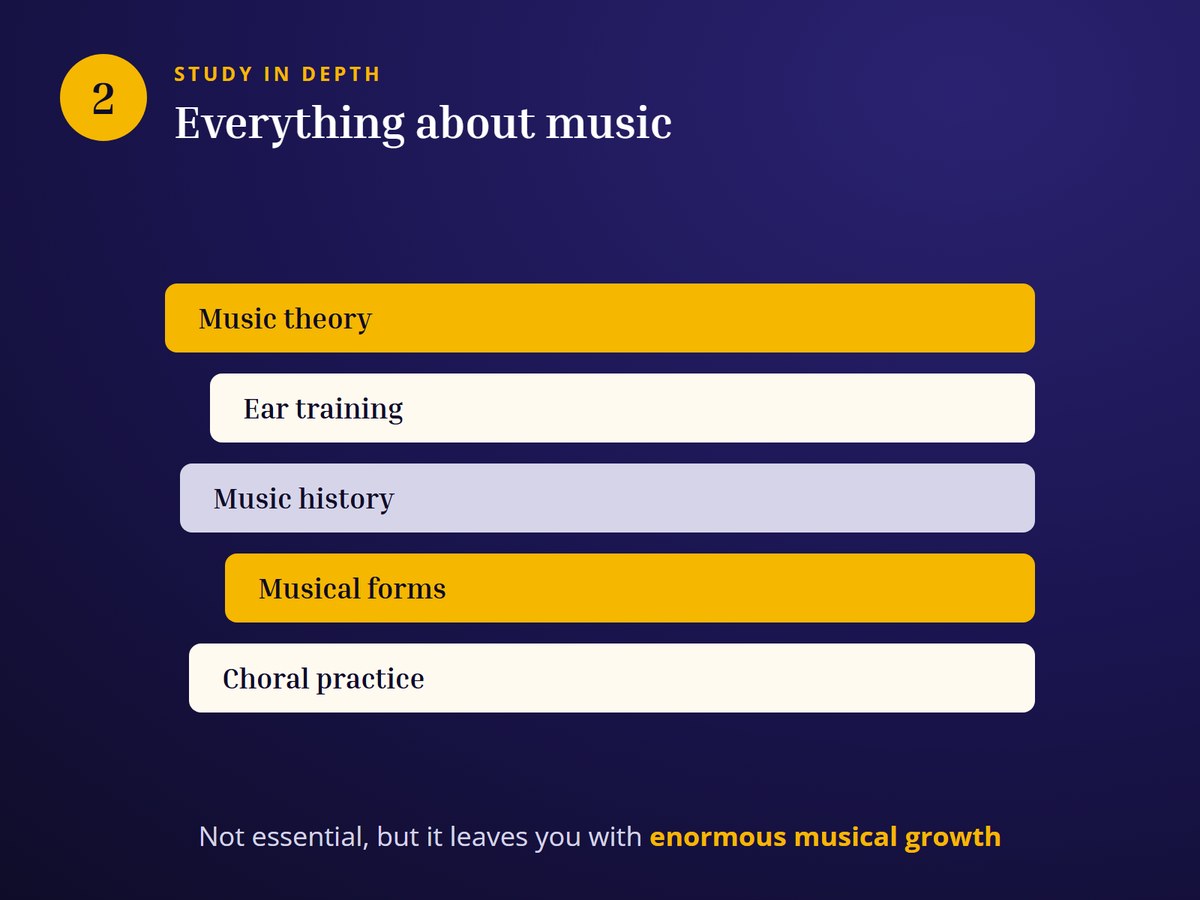
2. Studying everything about music in depth
Music theory, ear training, music history, musical forms, choral practice and more. When you need the tools these subjects offer, you’ll be grateful you took them, because although, like everything on this list, it isn’t essential, it leaves you with enormous musical growth that shows in your work.
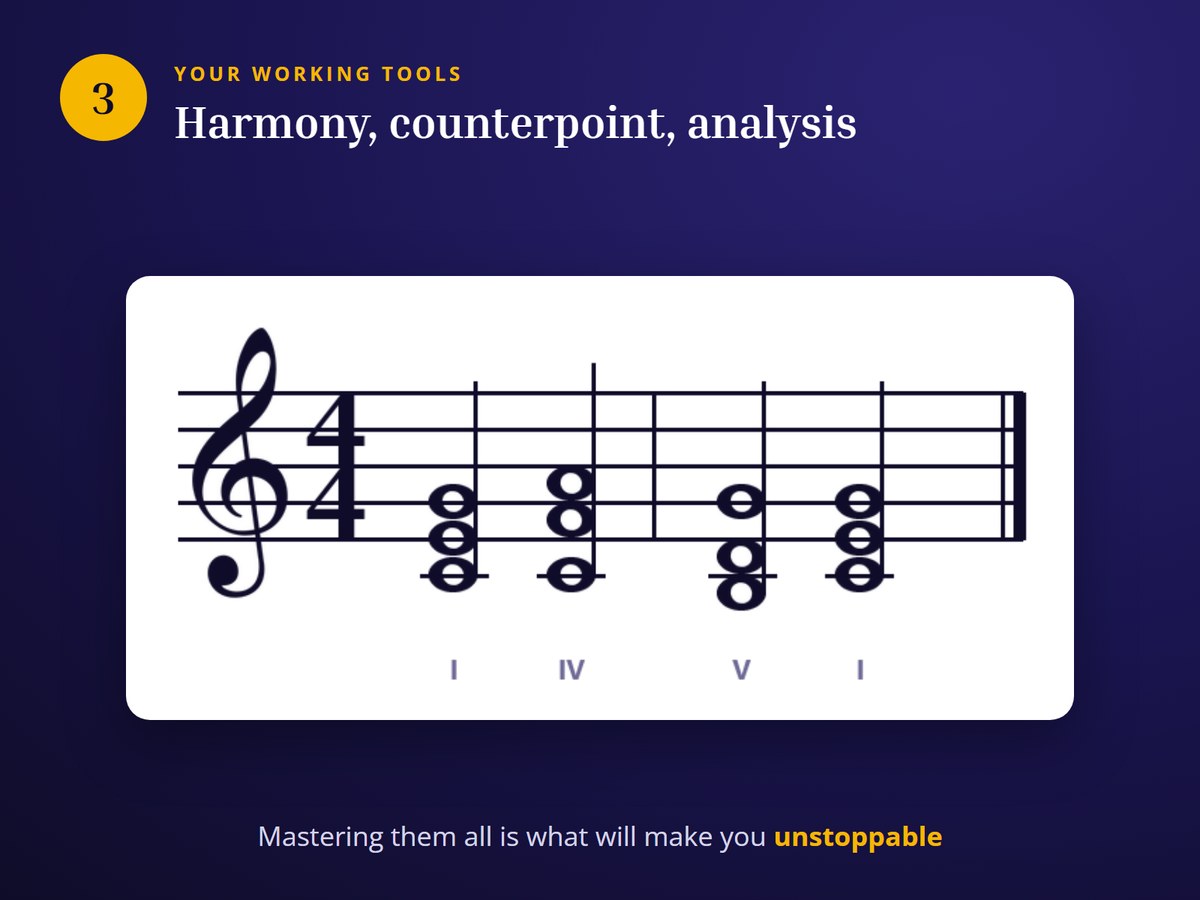
3. Harmony, counterpoint, musical analysis
Your main working tools, and once you finish studying them you realize they keep growing and developing day by day; there’s always something new, and keeping up is necessary for your growth. Some people prefer one over the others, but mastering them all is what will truly make you unstoppable.
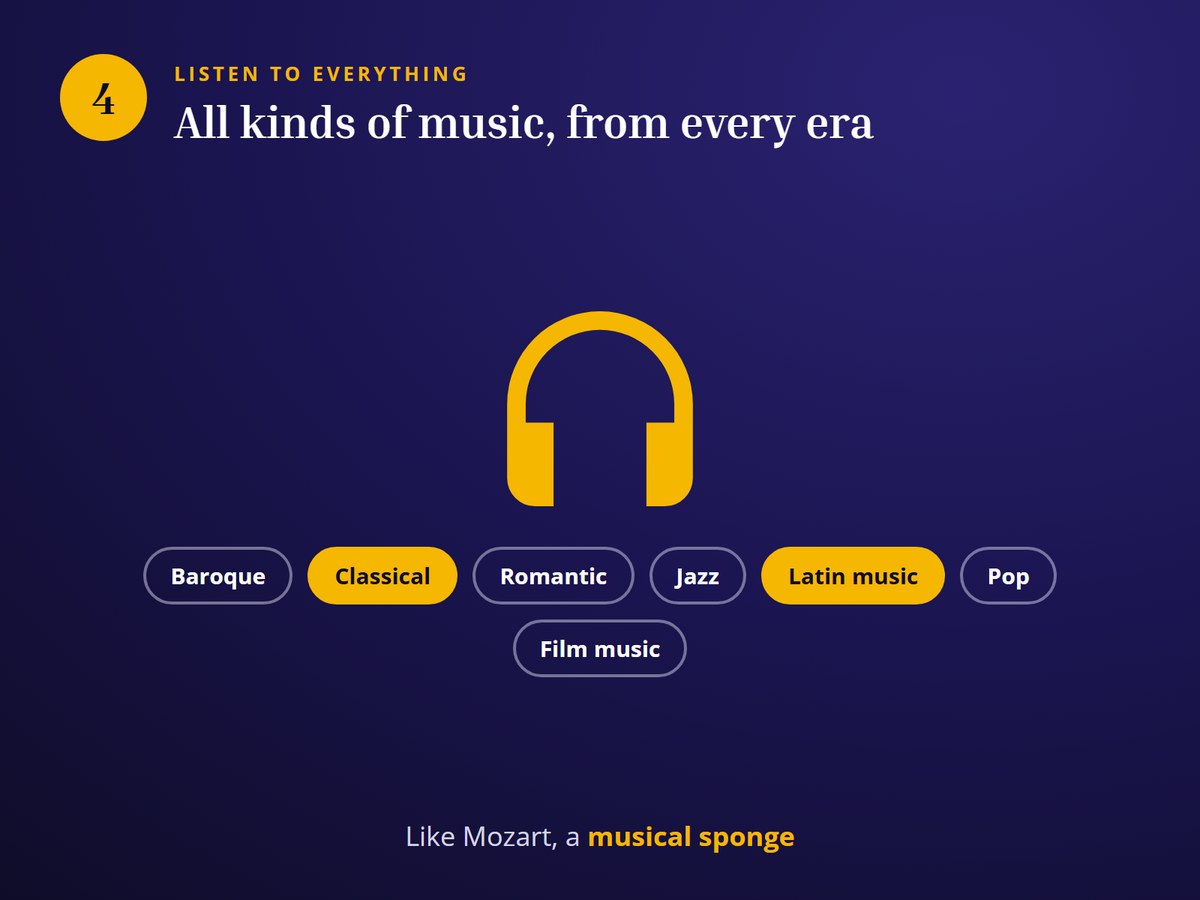
4. Listening to lots of music, of every kind and every era
It’s fine to have your favorites, but the more music you listen to, the more your ability to create and arrange grows. The best historical example we can share is Mozart, who was like a musical sponge: from childhood he met many musicians and their works, and in his music you can notice how he adapted everything he heard to his own essence (2). It isn’t about copying, it’s about growing by analyzing others.
Your first works
No one is born knowing everything, not even the greatest geniuses in history, so don’t get discouraged if you’re not happy with your first results: it’s natural, and the key is not to stop and to keep creating. Let’s imagine you’ve already graduated from your music studies (which is recommended, but not required) and you have a well-stocked toolbox; when you try to arrange or compose, you realize you don’t know where to start. It’s like building without a blueprint: you have so many materials, but you don’t know where or how to use them.
Our first recommendation would be to look for guidance from someone with a lot of experience in the field, who can walk you through it until you’re able to manage on your own, but we won’t leave you hanging without showing you where your journey begins.
Control your ideas
Music, like everything else, has an order. We know that if you love creating, your mind is flying with ideas, but mastery lies in your ability to develop those ideas, not in flooding your work with lots of ideas with no apparent order. Start from a structure: usually, when you’re starting out, you want to create something new bar by bar, and that’s the first mistake you need to face.
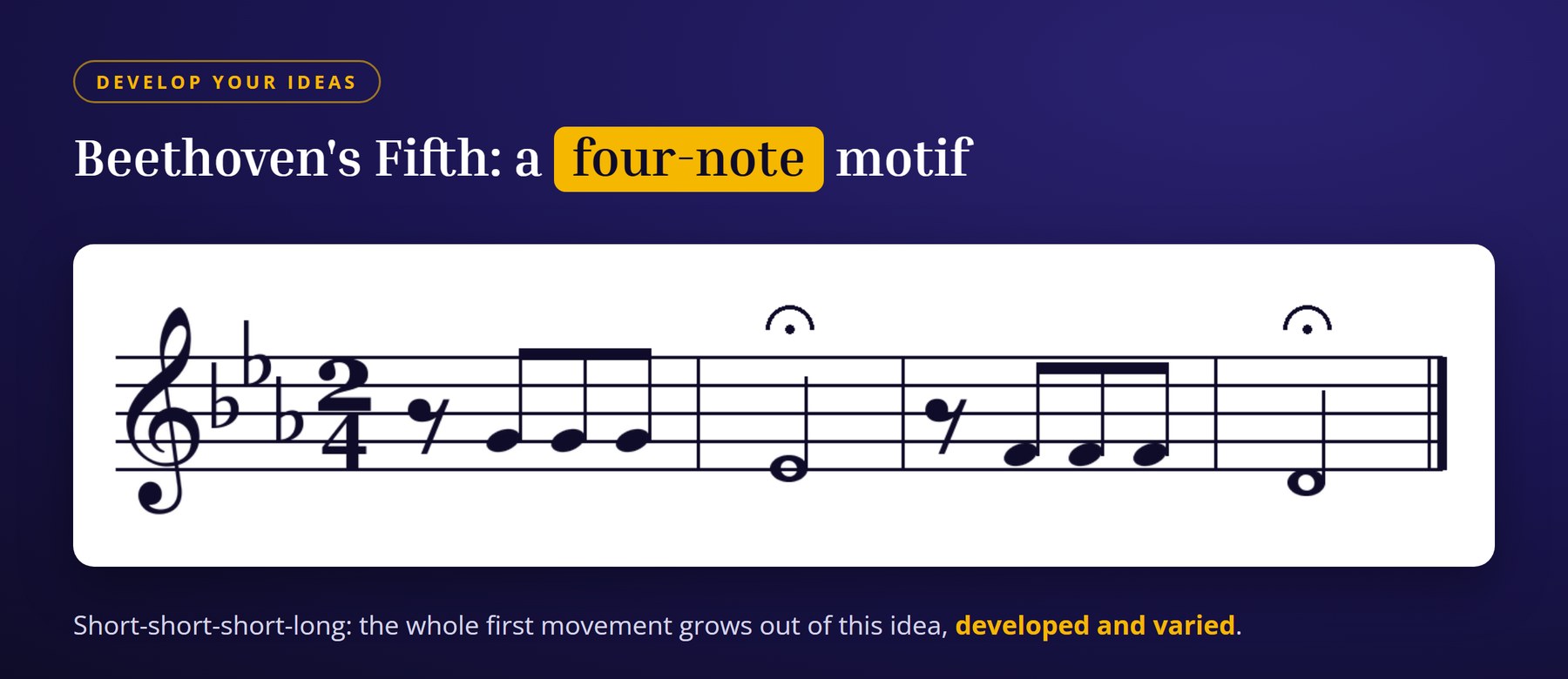
If you create a melody, let’s say two bars long, you shouldn’t “invent” a new melody for the third bar: you should develop this melody, make variations, create answers, try it over another harmony, extend it, shorten it, and so on. Take Beethoven’s Fifth Symphony as an example: its first movement opens with the famous four-note “short-short-short-long” motif, and most of its themes are developed from that single motif (1). It’s just 4 notes, you don’t need more, and this is where your ingenuity has to grow: how to keep people interested in those 4 notes for a whole movement, and for centuries after you’re gone.
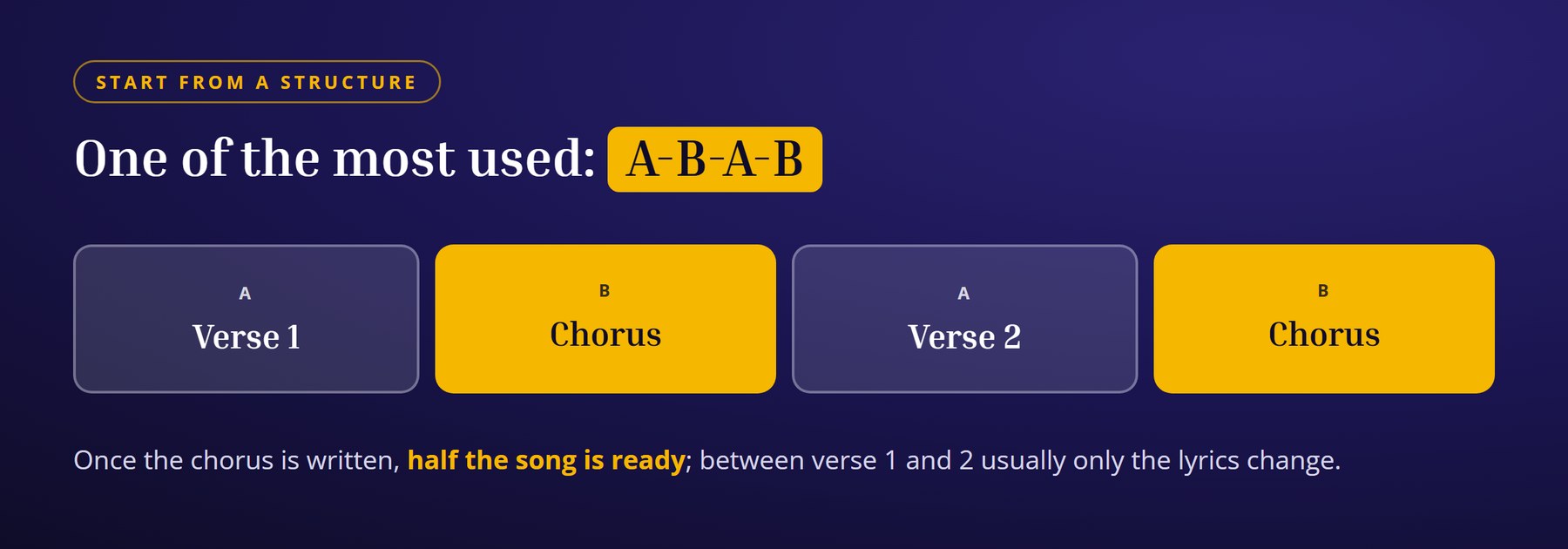
Don’t worry, you won’t start with something that complex. Remember you’re just beginning your journey, and the example above was only meant to give you an idea of what to aim for; besides, it applies to any genre and instrumentation: it isn’t just for a symphony orchestra, it’s very present in today’s music. One of the most used structures is A-B-A-B, in other words, verse 1, chorus, verse 2, chorus. This way, once you’ve written the chorus, half the song is ready, and between verse 1 and 2 usually only the lyrics change; everything else stays the same.
Start simple
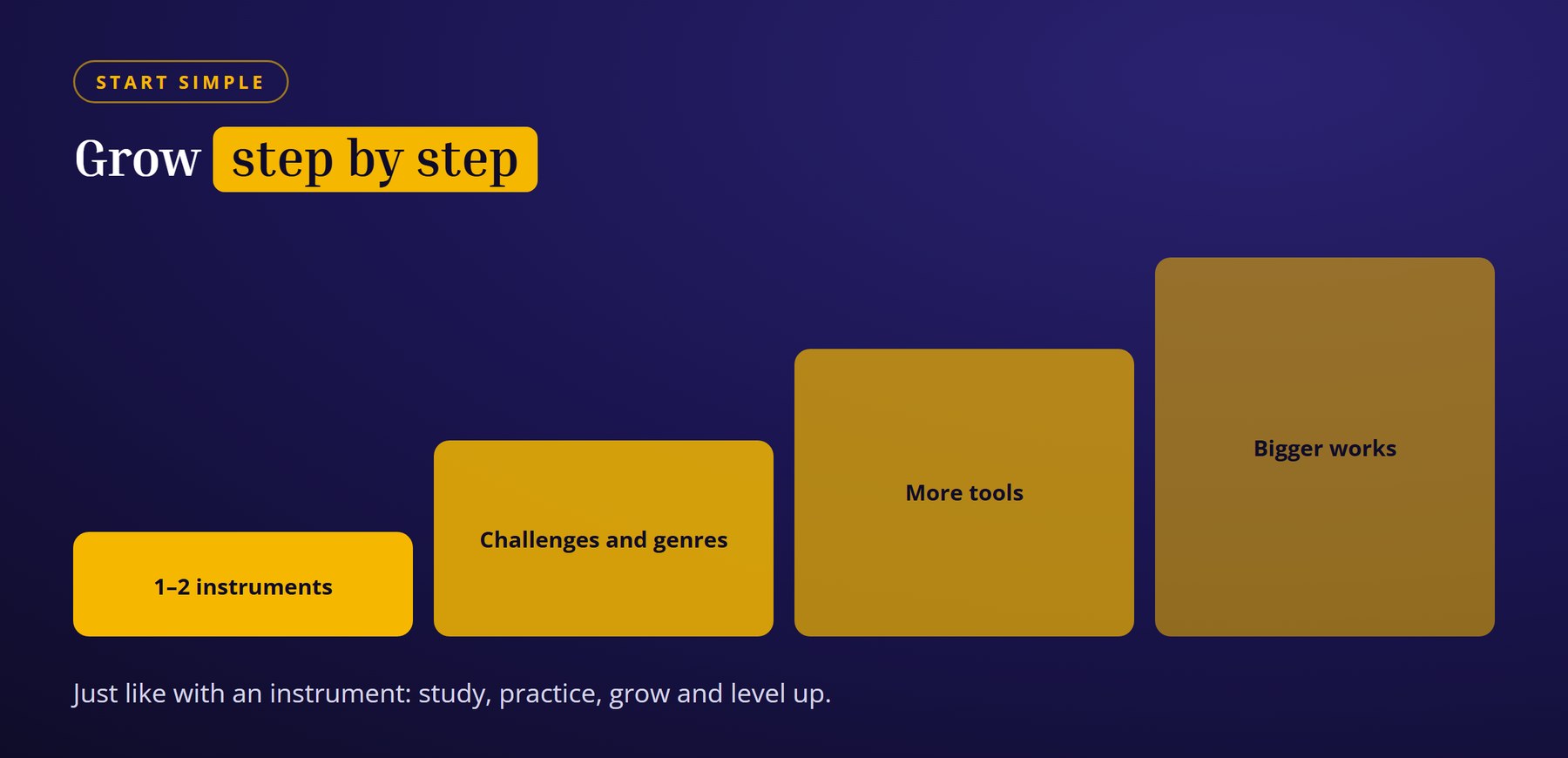
You can arrange or compose for 1 or at most 2 instruments. Challenge yourself, try different genres, add your tools little by little, but don’t start “dense”: simplicity will help you master the basics so you can do bigger things later. It’s like with instruments: you started with scales, not with virtuoso pieces. Keep in mind that arranging and composing is a lot like playing an instrument: you have to study, practice, grow and level up step by step.
Now that you know where to start, don’t wait any longer: go and make music. It takes years to develop as a performer, and also to grow as an arranger or composer, but the most important thing is to start and be consistent. Good luck on your journey!

0 Comments